Pokazywanie postów oznaczonych etykietą Puls. Pokaż wszystkie posty

poniedziałek, 12 marca 2012

Reklamy sygnowane cz 6.


Reklama mydła dla dzieci Pulsa. Sygnowana J. Zoller (?-?).

Signed advertisemsnts part 6.

Puls' baby soap ad. Signed J. Zoller (?-?).

wtorek, 3 maja 2011

Uroda Pulsa

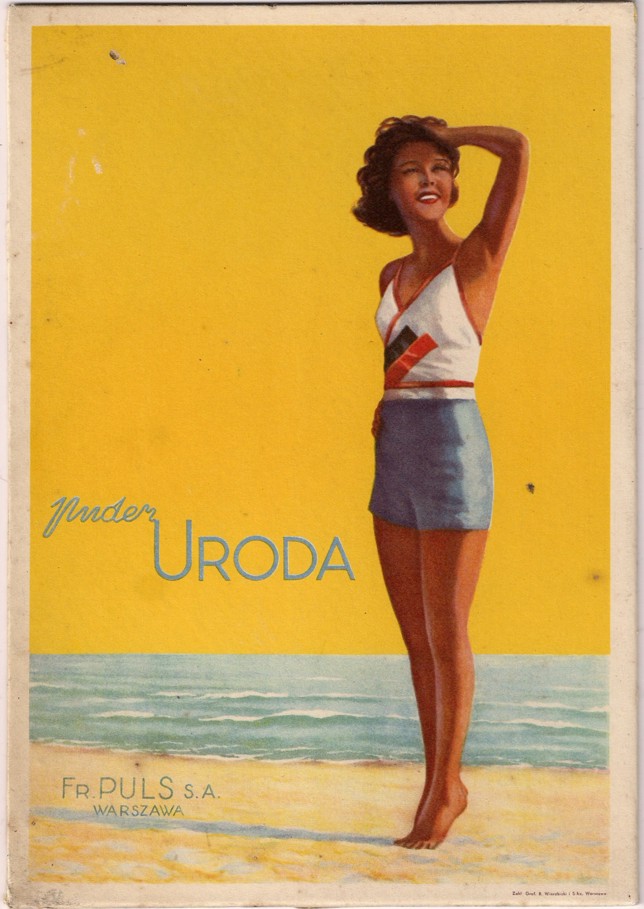
Jedną  z marek kosmetyków Pulsa była przed II Wojną Światową marka "Uroda". Oferowano dwa produkty: puder (w wielu odcieniach) i krem, na opakowaniach i w reklamach pojawiała się charakterystyczna sylwetka kobiety w sportowym stroju plażowym. Po wojnie nazwa "Uroda" pojawiła się jako marka kosmetyków produkowanych w starej warszawskiej fabryce Schichta na Szwedzkiej a w później dołączyła do nazwy fabryki ("Pollena-Uroda").


Na rysunkach:
Reklama sklepowa pudru Uroda, lata trzydzieste XXw.
Reklamy prasowe kosmetyków Uroda, lata trzydzieste XXw.
Puszka po kremie Uroda, awers i rewers, lata trzydzieste XXw.


Puls' Uroda brand


Before the World War II  the brand "Uroda" [Beauty] was one of brands of Puls' cosmetics.  Two products were offered: face powder (in many shades) and cream, on packages and in advertisements a characteristic profile of the woman in the casual beachwear appeared.  After the war the name "Uroda" turned up as the brand of cosmetics produced in the old Schicht's factory on Szwedzka street in Warsaw and later joined the factory name ("Pollena-Uroda"). 


On pictures: 
Shop advertisement of the Uroda face powder, 1930's
Journal and newspaper ads of Uroda-brand cosmetics, 1930's. 
Tin of the Uroda cream, the obverse and the reverse, 1930's

niedziela, 14 listopada 2010

Szampony w reklamie


Na rysunkach:

Reklama prasowa szamponu Elida (Schicht-Lever, po 1935)
Reklama prasowa szamponu dr Lustra „Miraculum” (1938)
Reklama sklepowa szamponu Pulsa (lata 30.)


On the pictures:

Press advert of Elida Shampoo (Schicht –Lever, after 1935) [What does make an ondulation permanent? Permanence of an odulation and beautiful hair shine are profits from proper care.  If you want be always happy from your hair looking, you have to choose a proper shampoo. Kamilloflor – alkali-free special shampoo, preserves natural light colour of fair hair and restores if after darkening. Brunetaflor - alkali-free special shampoo for dark hair, enhances its chestnut shade and adds a beautiful shine.]

Press advert of Dr. Luster’s “Miraculum” Shampoo (1938) [The secret of efficacy of Dr. Luster’s Miraculum shampoos is based on the neutralization – during shampooing – scalp and hair harmful secretions causing hair wasting away. Shampoos for fair and dark hair exist separately as well as chamomille shampoo for blonde hair lightening.]
  
Shop cardboard advertisement of Puls’ Shampoo (30-ties) (Puls’ Shampoo. Powdered or liquid.)

piątek, 12 listopada 2010

Puls przed I Wojną Światową


Na rysunkach:
Etui na bilety kolejowe z reklamą mydeł Pulsa, wydane przez  Wagons-Lits na linię transsyberyjską (przed I Wojną Światową)
Celuloidowa reklama mydła Kosmos.
Reprodukcja reklamy prasowej (po 1892 r.)
Ulotka z lat 30. XX wieku, reprodukująca materiał reklamowy z 1868 roku.

Puls brand history before the I WW
1852 the first Puls’ soap manufacture started production
1869 - the factory at Daniłowiczowska 12 street started the soap production (Przemysł Mydlarski i Perfumeryjny Fryderyk Puls). Daniłowiczowska street was before the II World War very cosmetic address, at this street a few companies producing cosmetics were situated, among the others Colgate-Palmolive
1870 - the second Puls’ factory started production at Gęsia 95 street
1892 -  Puls is selling the company and the brand to Klementyna Napros. At Wierzbowa 11 the shop selling Puls brand products was opened. The other shop selling own-label products was opened at the Nowy Świat 41 street
1900 or 1902 - the company was converted into the joint-stock company. The factory receives the name Parowa Fabryka Mydeł Toaletowych, Perfum i Wyrobów Kosmetycznych Towarzystwa Akcyjnego Fryderyk Puls (the Steam Factory of Toilet Soaps, Perfume and Cosmetic Products of the Joint-stock Company of Frederick Puls)
Puls’products ended the French export into Russia getting the leading position on the local market.

On the pictures:
Case for tickets with the advertisement of Puls' soaps,  issued by Wagons-Lits to the trans-Siberian line (before the I WW).
Celluloid advertisement of  Puls' Kosmos soap.
Reproduction of the press advertisement (after 1892).
Leaflet from 30-ties, reproducing an old advert from 1868

wtorek, 2 listopada 2010

Warszawa: Fryderyk Puls S.A.

Marka Fryderyk Puls tak jak wiele marek kosmetyków i wyrobów chemii gospodarczej z dwudziestolecia międzywojennego wywodzi się z przemysłu mydlarskiego. Fryderyk Puls otworzył niewielką (jak wszystkie ówcześnie) manufakturę produkującą mydło w 1852 roku, później poszerzył asortyment o wyroby perfumeryjne, niesamowicie wzmocnił markę i   … sprzedał firmę wraz z marką w roku 1892. Historia firmy do I Wojny Światowej jest ładnie opisana na blogu SirenCityBoy –Moja Warszawa, nie będę jej więc tu powtarzać.

Po I Wojnie Światowej asortyment kosmetyków Pulsa zaczyna się szybko poszerzać o nowe produkty – kremy do pielęgnacji rąk i twarzy, produkty do higieny jamy ustnej (pasty, proszki, eliksiry), kosmetyki do włosów (szampony w proszku, brylantyny, fiksatuary – czyli pierwsze kosmetyki do modelowania i utrwalania fryzury, pomady do wąsów ), pudry (sypkie, prasowane, w kremie, w wersjach dla pań i dla panów – do stosowania po goleniu), lakiery do paznokci i inne kosmetyki kolorowe. Cennik z 1933 roku wymienia już 831 pozycji kosmetycznych oraz mydła i proszki do prania. Najliczniej w ofercie kosmetycznej są reprezentowane mydła toaletowe – oparte o różne receptury bazowe (kokosowe, glicerynowe, różne typy mydeł przetłuszczonych), różne koncepcje pielęgnacyjne (mydła „zwykłe”, dla dzieci, pumeksowe – dziś byśmy powiedzieli pewnie „peelingujące”, dziegciowe, siarkowe itp.) i różne kompozycje zapachowe (poza typowymi dla tamtego okresu mydłami o zapachach kwiatowych w ofercie Pulsa znajdowało się m.in. mydło o zapachu świeżego siana). 

Stosunkowo późno, bo dopiero pod koniec lat 30. w ramach marki Puls zaczynają się wyodrębniać marki pochodne  - 333 (zniknęła wraz z firmą po II Wojnie Światowej) i Uroda (przejęta przez powojenną warszawską fabrykę Pollena-Uroda). Rozwój i historia marki Fryderyk Puls przypomina w ogólnym zarysie rozwój marki Schicht z tym, że Schicht znacznie mocniej akcentował swoją obecność na rynku wyrobów chemii gospodarczej i wcześniej wprowadził marki pochodne (Elida, Radion). Historia zresztą splotła losy marek obydwu gigantów – po II Wojnie Światowej kosmetyki Uroda przez lata produkowano w starej fabryce Schichta na Szwedzkiej.


Na rysunkach:

Reklamy prasowe kremu 333  (1938, prasa codzienna).

Ulotka reklamująca pastę do zębów Pulsa (lata 30.)

Opakowanie pudru tłustego Pulsa.

Reklama prasowa wody kolońskiej Pulsa (1938, prasa codzienna).

Reklama prasowa kremu Uroda (prasa codzienna, lata 30.).


Warsaw: Fryderyk Puls  plc

Fryderyk Puls brand, as many cosmetic and household brands of the period,  came out from the soap manufacturing. Fryderyk Puls opened a little (as all at that time) manufacture producing soap in 1852, later he broadened the assortment introducing perfumery products,  strengthened incredibly the brand and … he sold the company together with the brand in the year 1892. History of the company before the I World War is described nicely on the SirenCityBoy ‘s blog, so I’m not going to repeat it here, but I’m going to publish – maybe in the next entry - the abstract for non-Polish readers.

After the I World War the assortment of Puls’ cosmetics started quickly growing up introducing  new products – hand and skin care creams, dental hygiene products (toothpastes, toothpowders, dentifrices), hair care and styling products (dry shampoos, brilliantines, fixatuaries - first hair styling cosmetics, moustache pomades), powders (loose, pressed, cream, for women and for men – after shave type), nail polishes and various make-up cosmetics. The price list from 1933 is listing as many as 831 cosmetics and washing soaps and powders. Toilet  soaps were heavily represented  in the cosmetic offer – based on different soap bases  (coconut, glycerine, different types of superfatted soaps), different care concepts (regular soap, baby soap, pumiceous soap - today we are calling it  peeling or scrubbing soap, coal-tar soap, sulphuric soap and so on) and different perfume (apart from flowery-scented soaps typical of that period in the Puls’ offer was also a fresh hay-scented soap among the others).

Relatively late - at the end of 30-ties - under the Puls’ umbrella, started  subbrands: 333 (disappeared together with the company after the II World War) and Uroda (taken over by the post-war Warsaw factory Pollena-Uroda). Development and history of the brand of Fryderyk Puls are reminding the development of the Schicht brand in general, but Schicht was much stronger on the household products market and earlier introduced subbrands (Elida, Radion). History wreathed foothpaths of brands of both giants - after the II WW Uroda brand cosmetics were produced in the former Schicht’s factory on the Szwedzka street in Warsaw.

On the pictures:

Press advertisements of cream 333 (1938, the daily press) (Blessing for the complexion, particularly during the bad weather. Puls' 333 cream provides the fresh and delicate complexion).
Leaflet advertising Puls' toothpaste. (30-ties)
Tin of Puls' powder-in-paste.
Press advertisement of the Puls' eau de cologne (1938, the daily press) (thanks to the permanence and the subtility of scents is leading in Poland from four generations).

Press advertisement of the Uroda cream (the daily press, 30-ties) (One's caring the complexion rationally if constantly is applying the Uroda cream).
 

sobota, 23 października 2010

Mydło Pulsa

Tekturowe pudełko po mydle toaletowym  Pulsa. Zadziwiające jest jak dobrze się te pudełka zachowały – mam w swojej kolekcji cztery – w całkiem dobrym stanie. Biorąc jednak pod uwagę że mam również przedwojenne opakowanie (pełne!) proszku Persil z fabryki z Bydgoszczy, wszystko jest możliwe.


Cardboard box of  Puls'  toilet soap. Is it astounding how well these boxes were preserved - I have in my collection four - in the quite good condition. However , taking into consideration that I have also package (full!) of Persil washing powder from the factory in Bydgoszcz, everything is possible…

Warszawa: wprowadzenie

W Warszawie trzy największe przed wojną firmy produkujące i  dystrybuujące kosmetyki to Fryderyk Puls S.A., oferujący bardzo szeroki wachlarz wyrobów w tym kremy „Uroda”, Zakłady Chemiczne Ludwik Spiess i syn S.A. produkujące własne nieliczne kosmetyki i dystrybuujące kosmetyki Antiba oraz trzecia firma - Laboratorium Perfection produkujące m.in. kosmetyki pod marką Abarid. W Warszawie ulokowała się również spółka Colgate-Palmolive sp. z o.o. posiadająca własną fabrykę przy Daniłowiczowskiej, produkującą mydła, szampony i kremy do golenia. Kosmetyki (Elida) produkowała również fabryka Schichta (później Przemysł Tłuszczowy Schicht-Lever S.A.) przy Szwedzkiej. Poza tym w Warszawie działało wielu drobnych wytwórców kosmetyków, czasami oferujących bardzo wąski asortyment wyrobów. Wielu z ówczesnych producentów kosmetyków, takich jak wspomniany wyżej Spiess, traktowało ich wytwarzanie jako dodatek do produkcji leków i surowców farmaceutycznych.


Na rysunkach:
Cennik wyrobów fabryki perfum i mydeł Warszawskie Laboratorium Chemiczne (1927)
Pierwsza strona cennika wyrobów firmy Fryderyk Puls S.A. (1933)
„Dentosan – najlepsza pasta do zębów” - ulotka zakładów chemicznych Ludwik Spiess i syn S.A. (lata 30.)
Reklama szamponu Elida (prasa ilustrowana, lata 30.)
                                                                                                                                                                                                                
Warsaw: an introduction
Three the biggest companies that produced cosmetics in Warsaw were: the Fryderyk Puls S.A., offering a wide range of products including the “Uroda” cream, Laboratorjum Perfection  (producing cosmetics under the Abarid brand name) and Zakłady Chemiczne Ludwik Spiess i syn S.A. (producing some products under the Spiess brand name, and distributing other brands – e.g. Antiba). In Warsaw the Colgate-Palmolive limited liability company had its own factory at Daniłowiczowska Street, producing soaps, shampoos and shaving creams and the Schicht company (later the Przemysł Tłuszczowy Schicht-Lever S.A.) with a factory at Szwedzka Street, produced apart from household products Elida cosmetics. Apart from that in Warsaw many small-scale producers of cosmetics were acitive, sometimes offering the very narrow assortment of products. Many of the cosmetics producers, such as Spiess mentioned above, treated a cosmetics production as an additional activity to their main production of medicines and pharmaceutical raw materials.

On the pictures:
Price list of products of “Warsaw Chemical Laboratory” - perfume and soap manufacturer (1927)
The first page of a product price list of the Fryderyk Puls SA company. (1933)
„Dentosan – the best toothpaste” – a leaflet of the Ludwik Spiess factory  (30.)
Elida Shampoo press advertisement (illustrated press, 30.)
Related Posts Plugin for WordPress, Blogger...